
In most organizations, technology problems do not start with a “major” failure. They almost always begin with small symptoms: intermittent slowness, occasional disconnections, devices that only work “sometimes,” virtual meetings that drop unexpectedly, applications that take longer than usual to respond, or internal services that stop working without explanation. The critical issue is that when these warnings are ignored, they eventually turn into incidents that affect productivity, operations, and reputation.
The reality is simple: modern operations depend on a robust infrastructure. It is not enough to have internet access or connected devices; the difference between stability and chaos usually lies in design, organization, component quality, and ongoing maintenance. At SAG, we approach these projects with a professional mindset—we plan, implement, and maintain the technological foundation that allows everything else to operate continuously.
This article explains why a well-designed infrastructure reduces risk and prevents critical failures, and how a technical, organized, and scalable approach translates into fewer interruptions, greater control, and a more reliable experience for both internal users and customers.
When Technology Fails, It Is Almost Always the Foundation
Many companies invest heavily in software, platforms, communication tools, and internal systems, but treat infrastructure as a “secondary” concern. This is a common mistake. Infrastructure is the foundation on which everything operates: communications, internal systems, security, remote services, storage, and business continuity.
When the foundation is poorly implemented, problems are not solved by changing applications or buying more expensive equipment. They repeat over and over because the root cause lies in the structure: improvised connections, overloaded devices, disorganized cabling, unlabeled points, lack of planning, absence of maintenance, and uncontrolled growth.
At SAG, we see a clear pattern: when infrastructure is designed correctly from the start, the business does not “suffer” from technology. Instead, technology works quietly, steadily, and predictably—exactly what organizations need.
Signs Your Infrastructure Needs Professional Attention
There are recurring signs in homes and businesses when infrastructure is operating at its limit or was installed without a growth-oriented vision. Identifying them early helps prevent interruptions that can impact critical activities.
- Intermittent connections on key devices
- Network outages during peak demand hours
- Virtual meetings with dropouts or unstable audio
- Internal services that work “sometimes” and fail at others
- Network points without identification or organization
- Accumulated equipment without structure or proper ventilation
- Improvised expansions using adapters and temporary solutions
When these signs appear, it does not necessarily mean that “everything is wrong,” but they do indicate that your infrastructure needs a technical assessment. At SAG, we perform evaluations and provide recommendations to strengthen the foundation and prevent problems from escalating.
Design and Organization: The Difference Between Stability and Frustration
Professional design is not just about “running cables and connecting devices.” It is about planning how information flows within the space, how connection points are distributed, how performance is ensured, and how future maintenance is facilitated. Organization is not aesthetics—organization is control, and control is continuity.
When everything is properly structured, failures caused by loose connections, interference, saturation, overloads, and configuration errors are significantly reduced. It also becomes much easier to diagnose issues quickly, because an organized system can be clearly understood and audited.
What a Well-Executed Design Achieves
- Consistent performance without slowdowns
- Greater stability in internal and external communications
- Faster diagnostics when incidents occur
- Capacity for growth without improvisation
- Fewer blind spots and temporary fixes
At SAG, we design with both the present and the future in mind. We do not just solve today’s need; we build infrastructure prepared for expansion, change, and new technological demands.
Key Components of a Reliable Infrastructure
For infrastructure to be reliable, each component must serve a clear purpose and be properly integrated. It is not about “installing whatever is available,” but about selecting and organizing equipment coherently. Component quality matters—but how it is installed, labeled, organized, and documented matters just as much.
Structure and Organization
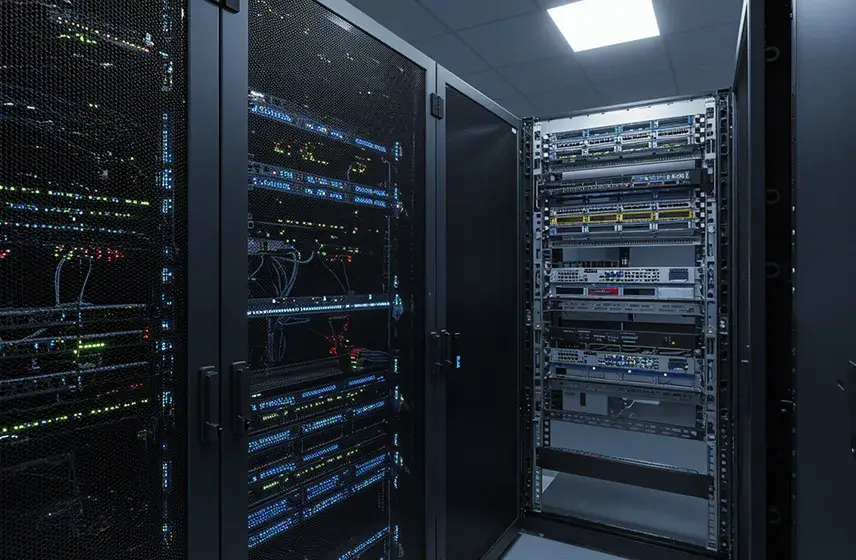
Professional infrastructure requires physical organization: cabinets, order, proper distribution, adequate ventilation, and separation of elements. This not only improves appearance—it reduces failures caused by overheating, accidental disconnections, and human error during maintenance.
- Centralized organization for equipment and connections
- Clear identification for future maintenance
- Planned distribution to minimize risks
- Better control of growth and changes
Intelligent Connectivity Distribution
Not all network points have the same priority. Some areas require greater stability, lower latency, or the ability to support more devices. Intelligent distribution prioritizes critical points and ensures performance remains stable even as demand increases.
At SAG, we analyze how the space is actually used: where work happens, where stability is critical, where sensitive equipment connects, and how to design an architecture that supports real operations—not assumptions.
Wireless Connectivity: Convenience with Proper Planning
Wireless connectivity offers convenience, mobility, and flexibility. However, when implemented without planning, it becomes a constant source of problems: dead zones, interference, saturation from too many devices, and competing signals.
A professional approach considers user density, device types, physical obstacles, interference sources, and strategic placement. The goal is simple: a stable experience, even under heavy usage.
Common Problems Caused by Poor Planning
- Dead zones with no signal coverage
- Unstable connections during peak usage
- Interference due to incorrect placement
- Overloaded equipment unable to handle demand
- Random disconnections caused by misconfiguration
At SAG, we implement solutions based on real usage patterns, avoiding generic setups. The result is more reliable connectivity that supports daily operations and improves the experience for all users.
Fiber Optics: Stable Performance for Demanding Environments
When high performance, stability, and capacity are required, fiber optics become a fundamental option. Its main value lies in maintaining consistent performance, reducing interference, and supporting high demand. This is especially valuable in environments with multiple users, internal services, critical equipment, and operations that cannot afford downtime.
A modern infrastructure is not just about speed—it is about stability. Stability is the difference between an environment that works “most of the time” and one that works “all the time.” At SAG, we evaluate when fiber optics are the right solution to achieve the best outcome based on real needs.
Maintenance: What Separates Reliable Infrastructure from Fragile Systems
Infrastructure does not maintain itself. Over time, dust accumulates, connections loosen, equipment changes, devices are added, and configurations are modified. Without maintenance, these changes lead to instability. What works today may fail tomorrow without warning.
Professional maintenance is more than inspection. It involves validating performance, correcting critical points, cleaning, organizing, optimizing, and documenting. It also helps identify issues before they turn into incidents that affect productivity.
What Professional Maintenance Delivers
- Fewer unexpected failures
- Improved performance and stability
- Extended equipment lifespan
- Reduced operational interruptions
- Better control and documentation of the environment
At SAG, we provide technical support to keep your infrastructure organized, stable, and ready to meet daily demands.
Scalability: Growing Without Improvisation
Infrastructure designed with foresight allows growth without “patches.” This is essential when companies add staff, integrate new areas, introduce services, or connect more devices. If the original design does not account for growth, every expansion becomes a risk.
Scalability is built through organization, documentation, intelligent distribution, and components selected to support future demand. A scalable environment enables change with less time, lower cost, and reduced risk.
What Infrastructure Ready to Grow Looks Like
- Planned points for expansion
- Reserved capacity for new equipment
- Clear documentation of connections and routes
- Organization that allows intervention without errors
- Stable performance even with more users
At SAG, we design with this mindset: building a solid foundation that does not require improvisation as the business evolves.
Common Scenarios: Why Companies Lose Hours to “Minor” Failures
In many environments, interruptions are not perceived as “critical” because they last only a few minutes. However, when they add up over the month, they represent hours of lost work, frustration, and reduced productivity. Worse still, a dangerous culture can emerge—normalizing that something fails “from time to time.”
Well-designed infrastructure eliminates this normalization. The goal is connectivity so reliable that no one has to think about it. That is the professional standard we promote at SAG.
Conclusion: The Right Infrastructure Is Invisible—But It Supports Everything
Technological infrastructure is like a building’s foundation: when it is done right, no one notices it, but everything stands firm. When it is poorly built, problems arise repeatedly—no matter how many “quick fixes” are attempted.
If you are seeking stability, organization, and continuity, the right approach is to strengthen the foundation with a professional methodology. At SAG, we design and implement solutions that keep your operations running and your connectivity reliable over time.
We invite you to explore our services or request a technical recommendation through our contact page. We will be glad to evaluate your environment and help you build infrastructure designed for stability and scalable growth.


