
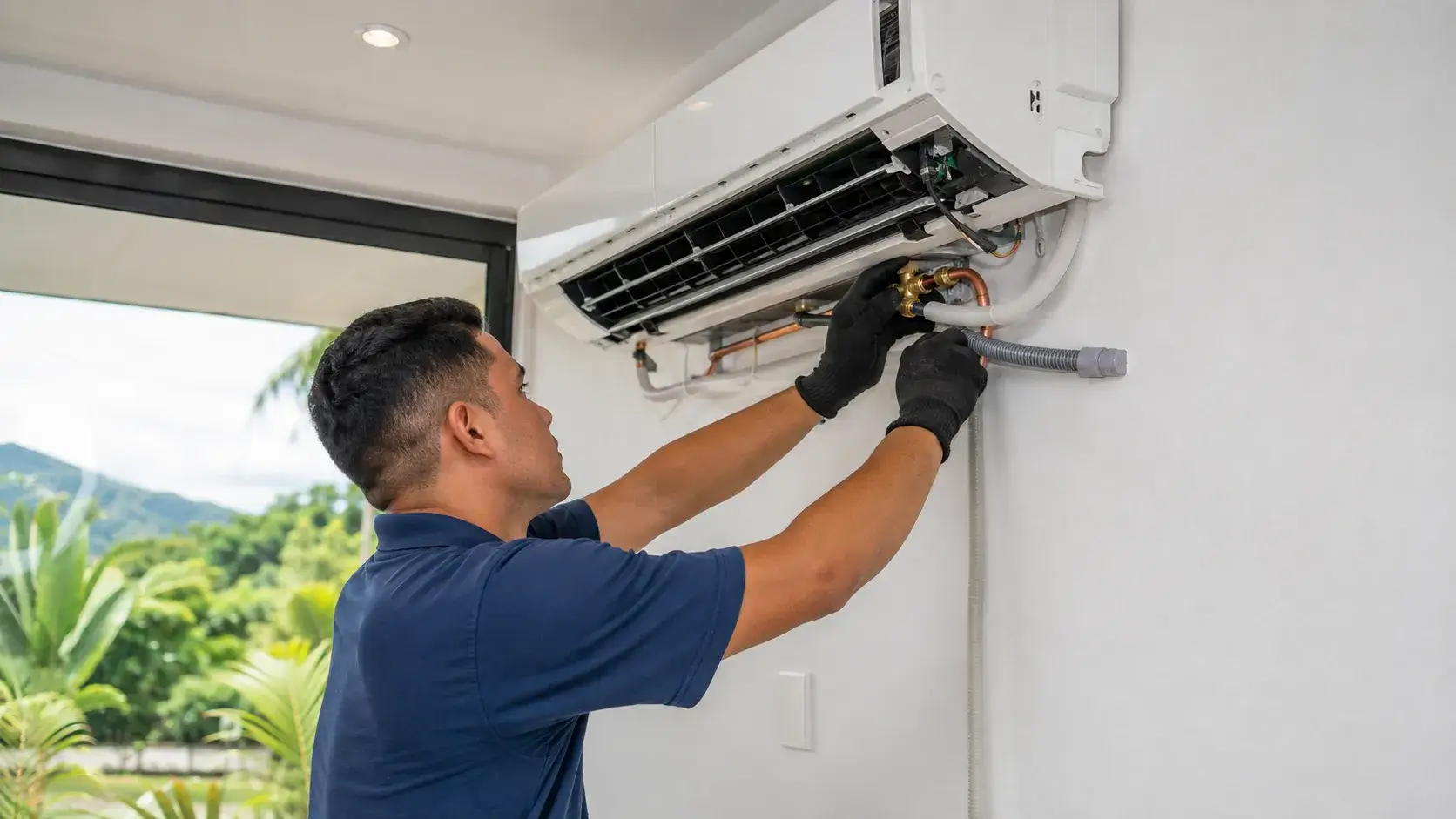
The performance of a climate control system depends not only on the quality of the equipment but also on how it is installed. A proper air conditioning installation in Costa Rica should include equipment placement, mounting, piping, drainage, electrical connections, vacuum testing, and commissioning to ensure efficient and safe operation.
At SAG, we provide air conditioning installation and maintenance services for homes, offices, and businesses, evaluating the conditions of each space before defining the solution. The goal is to achieve thermal comfort, energy efficiency, and a longer service life for the system.
What does an air conditioning installation in Costa Rica include?
Installing an air conditioner involves much more than mounting a unit on a wall. It is a technical process that connects and commissions all the components required for the system to operate correctly.
Every project has different conditions, but a professional installation normally includes several essential stages.
1. Selecting the equipment location
Before drilling or mounting any component, the correct location for both the indoor and outdoor units must be determined. Placement should take into account airflow distribution, ventilation, distances, aesthetics, functionality, and future access for maintenance.
2. Installing the indoor unit
The installation of the evaporator includes securing the mounting plate, making the necessary openings for pipes and cables, mounting the unit, and properly leveling it. Correct leveling is especially important to help remove condensation generated during operation.
3. Installing the outdoor unit
The condenser can be installed on a wall, floor, or suitable structure depending on the conditions of the project. Anti-vibration bases may also be used, and adequate ventilation around the equipment must be maintained.
Copper piping, insulation, and protection
The indoor and outdoor units are connected using copper piping designed for the refrigeration circuit. These pipes require thermal insulation and an organized installation that helps protect them from damage.
- Liquid line piping.
- Suction line piping.
- Thermal insulation.
- Protective channels or trays.
- Technical connections between both units.
Learn more about the service on our air conditioning installation and maintenance page.
Electrical connections and protection
An air conditioning system requires a properly installed electrical supply. The work may include power wiring, communication wiring between units, and appropriate electrical protection based on the equipment and project requirements.
An inadequate electrical connection can affect both performance and safety, which is why this stage should always be handled with technical criteria.
Drainage system: essential for preventing leaks
Air conditioning systems generate condensation during operation. This moisture must be removed through a properly installed and leveled drain hose or drainage system.
An incorrect slope or poor installation can cause water leaks, moisture buildup, and damage to walls or finishes. For this reason, drainage should be planned from the beginning of the project.
Vacuum testing, leak inspection, and commissioning
Before the system is turned on, several technical checks must be completed. Vacuum testing helps prepare the piping correctly, while leak inspection helps confirm the integrity of all connections.
Afterward, the refrigerant is released and key operating parameters such as pressure, general performance, and cooling capacity are verified.
- Vacuum testing of the piping.
- Inspection for possible leaks.
- Release of refrigerant.
- Pressure verification.
- Cooling and operating tests.
Why is professional installation important?
A proper installation directly affects the performance, energy consumption, and durability of the equipment. A system installed without considering technical requirements may develop failures, vibrations, refrigerant leaks, or drainage problems.
A professional installation can help achieve:
- Maximum equipment performance.
- Lower energy consumption.
- Reduced risk of refrigerant leaks.
- Longer compressor service life.
- Less vibration and noise.
- Lower risk of water leaks and wall damage.
Air conditioning installation for homes
In residential spaces, the system should be selected according to the area to be cooled, room layout, and installation conditions. Bedrooms, living rooms, and home offices may require different configurations.
Evaluating the space beforehand makes it easier to define the location of the evaporator, the piping route, and the position of the condenser.
Air conditioning installation for businesses
Offices, stores, and business facilities require systems capable of maintaining comfortable conditions during extended operating hours. A well-planned installation helps create a stable environment for employees, customers, and equipment.
Business projects should also consider maintenance access, energy consumption, and potential future expansion.
Installation and maintenance work together
A proper installation is the starting point, but periodic maintenance is necessary to preserve system performance. At SAG, preventive maintenance may include cleaning and inspection of the main components.
- Filter cleaning.
- Cleaning of evaporator and condenser coils.
- Drain pan cleaning.
- Refrigerant inspection.
- Cleaning of turbines and fans.
- Electrical and connection inspection.
- Pressure verification.
- Cleaning of indoor and outdoor units.
Depending on equipment use and operating conditions, preventive maintenance can be scheduled periodically to keep the system in better condition and reduce the likelihood of failures.
Benefits of keeping your air conditioning system in good condition
A clean and properly serviced system can provide more stable and efficient performance. Maintenance helps preserve cooling capacity, reduce dirt buildup, and identify potential issues before they result in more expensive repairs.
- Better cooling performance.
- Improved energy efficiency.
- Longer equipment service life.
- Reduced unpleasant odors.
- Prevention of costly failures.
What should be checked before installing an air conditioner?
Before beginning an installation, the space and available technical conditions should be evaluated carefully.
- Location of the indoor unit.
- Location and ventilation of the outdoor unit.
- Distance between both units.
- Piping route.
- Available drainage outlet.
- Electrical supply and protection.
- Access for future maintenance.
Conclusion: a good installation protects your investment
A proper air conditioning installation in Costa Rica helps maximize equipment performance, control energy consumption, and reduce the risk of problems related to piping, drainage, or electrical connections.
At SAG, we provide climate control solutions for homes and businesses. If you need to install a new unit or schedule maintenance, visit our air conditioning service page, explore our services, or contact us through our contact page for specialized assistance.


